


Veelgestelde vragen
Which material should I choose for a first prototype?
Cardboard is the obvious choice for a quick form study. MDF, plywood, or acrylic make more sense when fit, enclosures, or visible parts become more important.
What do I use to test the fit or shape?
Cardboard, MDF, and plywood are often used to test shapes, slots, holders, and enclosures before developing a design further.
Which bundle is best for prototype testing?
The Prototyping bundle (CO2) has been compiled for extensive material testing with acrylic, MDF, plywood, foam, foil, and cardboard during early iterations.

Recommended value bundle
Prototyping value bundle
Normal price
€24,24 EUR
Normal price
Promotional Price
€24,24 EUR
Unit price
per
Taxes included.
Shipping costs are calculated at checkout.
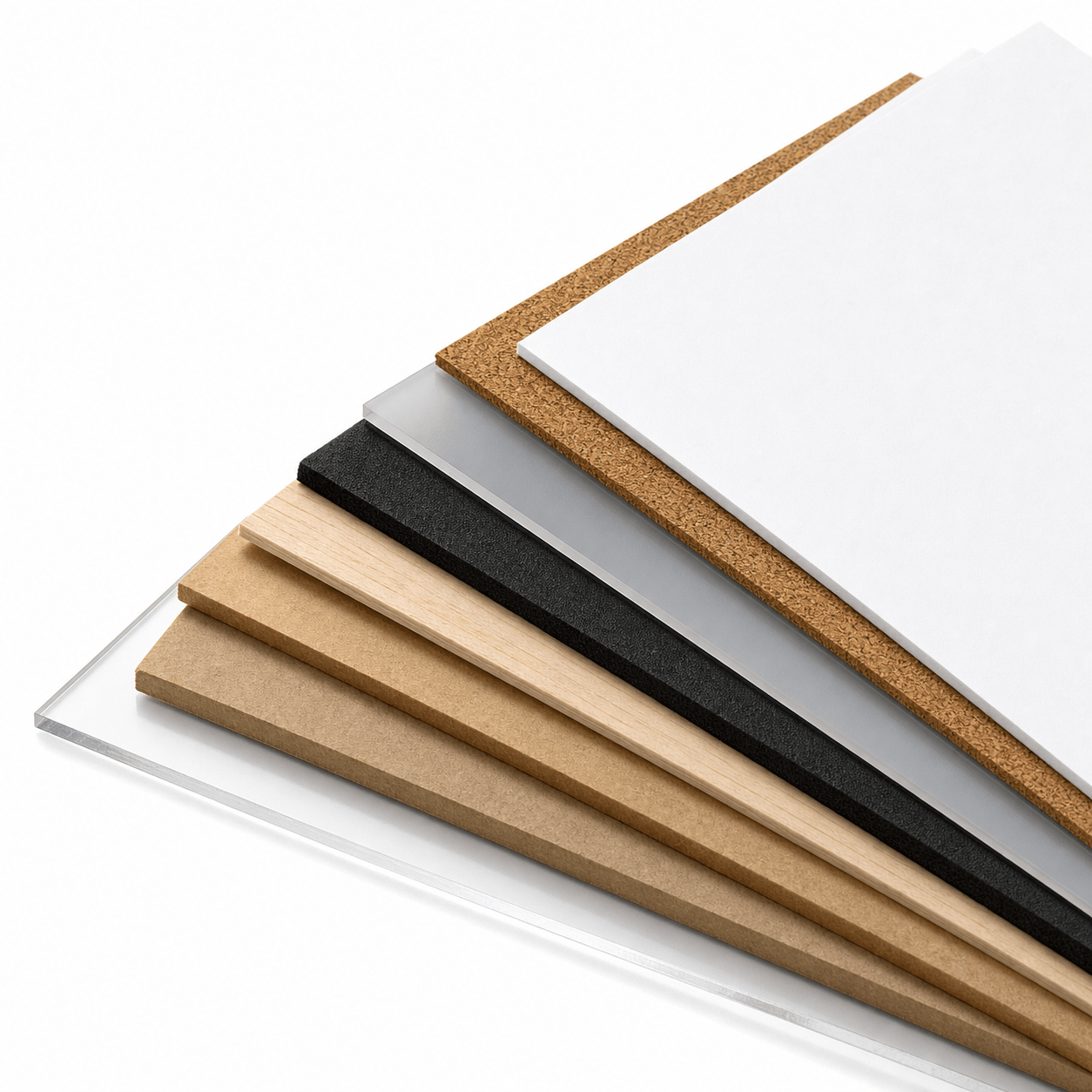
Choose the right material for your project
Are you still unsure which material best suits your project? View our complete range of laser-ready sheet materials or use the material selection guide to quickly make the right choice. This way, you can easily find materials that match your application, laser, and desired finish.