


Veelgestelde vragen
Which materials are useful for classes or makerspaces?
Cardboard, MDF, plywood and acrylic are often chosen for educational projects where participants can compare materials and create their first shapes.
How do you get started with beginner projects?
Start with cardboard or MDF for simple shapes and short assignments. Add plywood or acrylic later to discuss differences in appearance.
Is there a bundle to compare materials?
The Starterpack (CO2) is a logical basic set for schools and makerspaces looking to compare acrylic, MDF, plywood, foam, hardboard, and film.

Recommended value bundle
Starter Pack Value Bundle (CO2)
Normal price
€24,83 EUR
Normal price
Promotional Price
€24,83 EUR
Unit price
per
Taxes included.
Shipping costs are calculated at checkout.
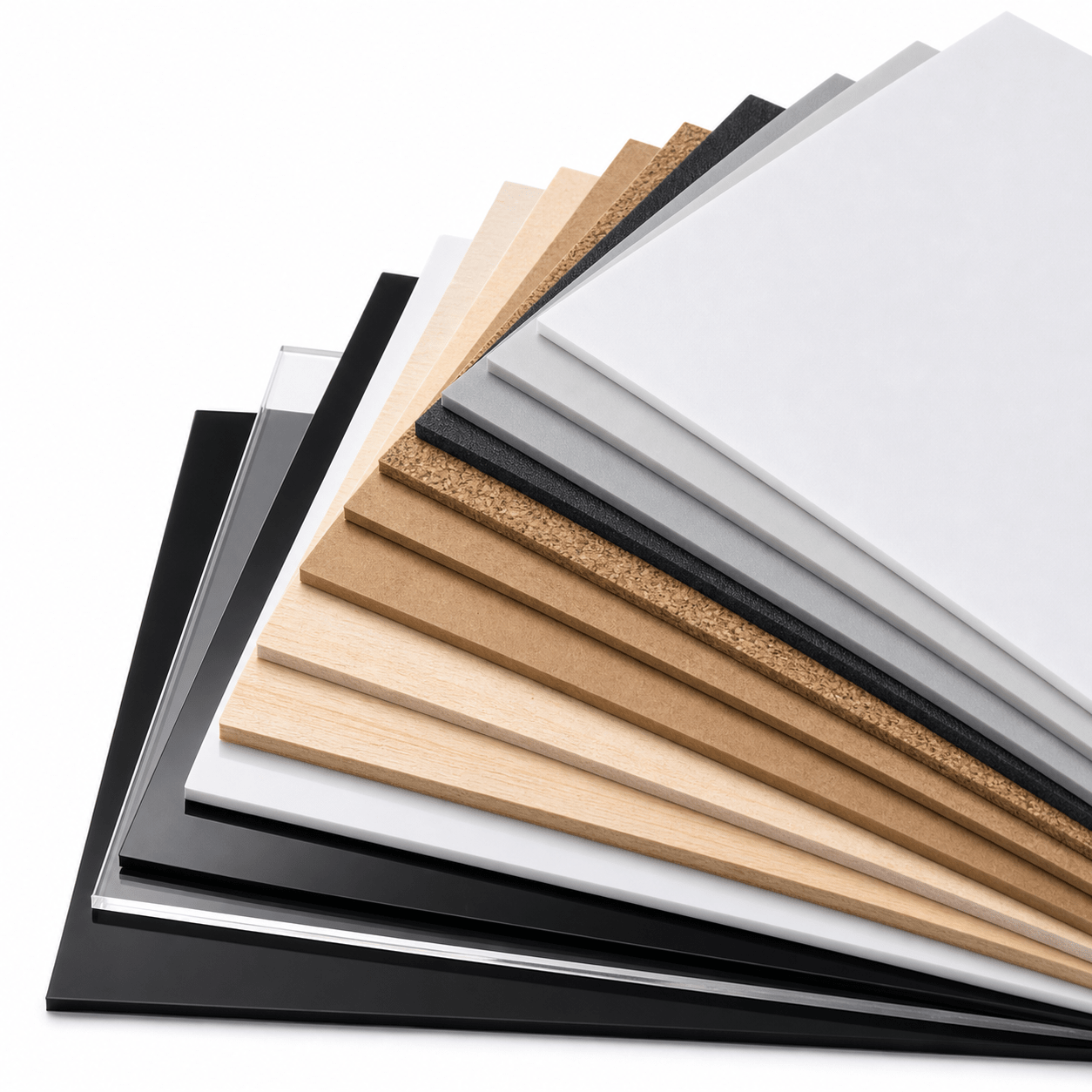
Choose the right material for your project
Are you still unsure which material best suits your project? View our complete range of laser-ready sheet materials or use the material selection guide to quickly make the right choice. This way, you can easily find materials that match your application, laser, and desired finish.